Padua Botanical Garden
There’s something so magical about being in the presence of medicinal plants, that have, forever, known what it is to help us heal.
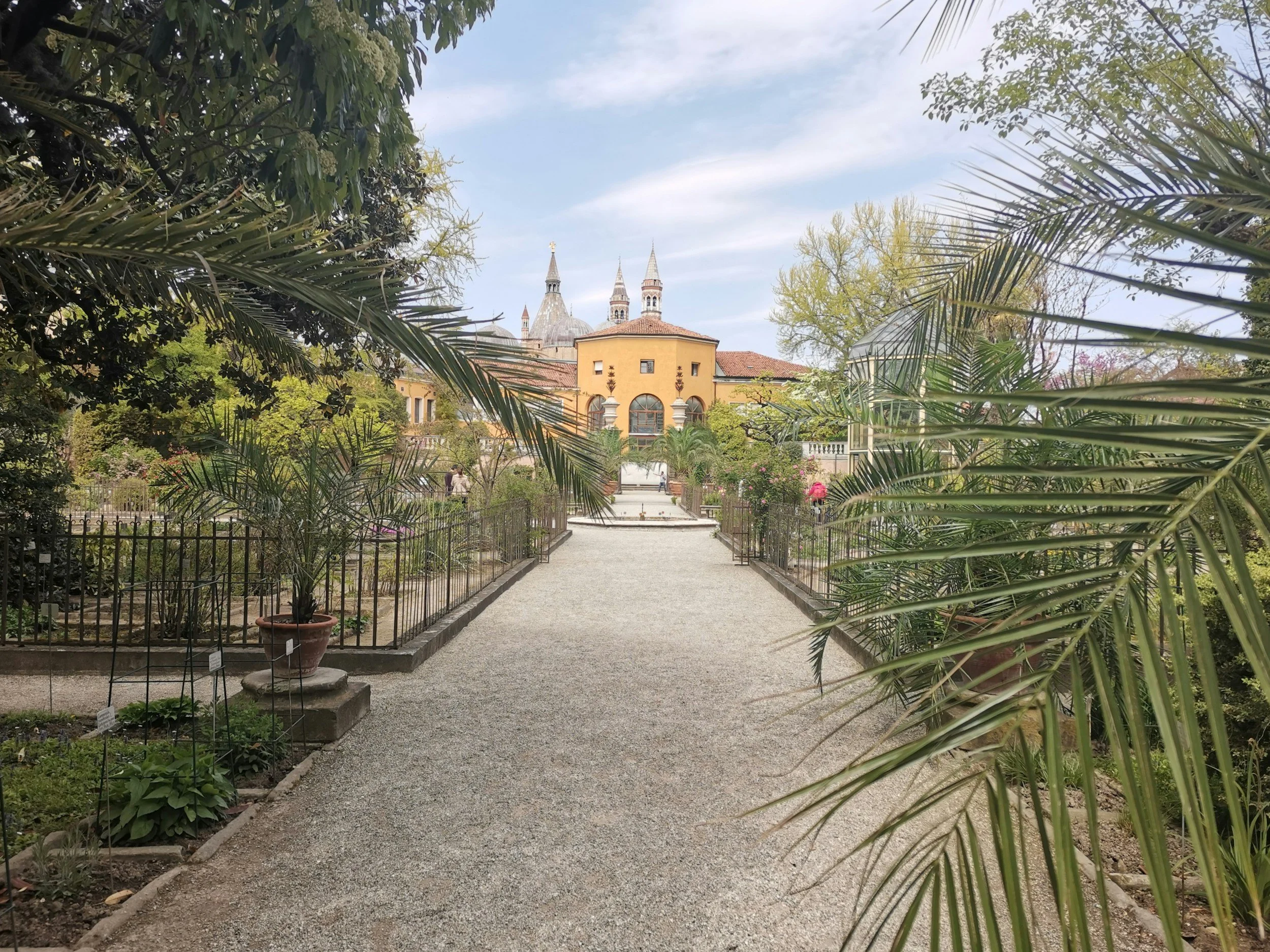
Malika Meddings continues her exploration of botanical gardens, this time visitng Padua in northern Italy.
Botanical gardens have played a vital role throughout history in the communication and exchange not only of ideas and concepts but also of plants and knowledge. The Botanical Garden of Padua, created in 1545, is the world’s first and oldest surviving university botanical representing the birth of botanical science, scientific exchanges, and understanding of the relationship between nature and culture.
It continues to serve its original purpose as a centre for research. It preserves its original layout, a circular central plot symbolizing the world surrounded by a ring of water representing the ocean. The plan is a perfect circle laid out in the directions of the compass.
When the four entrances were redesigned in 1704, the wrought-iron gates leading to the inner circles and the four acroteria were placed on eight pillars and during the first half of the 18th century, the balustrade, which runs along the top of the entire 250 m of the circular wall, was completed.
The Botanical Garden of Padua houses two important collections: the library that contains more than 50,000 volumes and manuscripts of historical and bibliographic importance and the herbarium, which is the second most extensive in Italy.
Particularly rare plants were also traditionally collected and grown in the garden. Currently, there are over 6,000 species, arranged according to systematic, utilitarian and ecological-environmental criteria, as well as thematic collections.
The Botanical Garden of Padua is exceptional by virtue of its high scientific value in terms of experimentation, education and collection, and has made a profound contribution to the development of many modern scientific disciplines, notably botany, medicine, ecology, and pharmacy.
The Garden has been a source of inspiration for many other gardens, influencing both their architectural and functional designs, and their didactic and scientific approaches in medicinal plant studies.
So why was I there?
I went here on a hot sunny day, having arrived in Padua in a terrible mood. The three days previous having spent wandering the Dolomites, and I was missing them already.
My second day had been beset by cloud and fog, preventing my longed for visit to Seceda, and as I took the train south from Bolzano, changing in Verona for the slow train to Padua, I just had this heart wrenching feeling that I should have stayed longer, even if for just one day.
The sun was shining brightly on my travel day, and as I sat outside the train station, mind wandering through the experiences of the last few days, I contemplated a fountain across the street, with the sun catching the mist from the water when it felt the breeze and turned it to a temporary rainbow, fleeting and completely brain blastingly beautiful.
I did reflect that if I hadn’t been there, at that moment, from that angle, in that sunshine and in that perfect breeze, that I would have never been transfixed by this beauty.
That it was fleeting and not in my control to determine how long I would enjoy it… my mind wandered to friendships, death and appreciating everyone I meet, and then the bell sounded and I was about to miss my connection… anyway I was on the way to Padua to fill another long dream of visiting the oldest botanical garden in the world (*that is still in the same place)(does this mean other ones moved?).
In the entrance queue the couple in front of me asked the guards – is this place worth visiting, and they said, well if you don’t like plants it might be boring, but if you love plants then it is a gem.
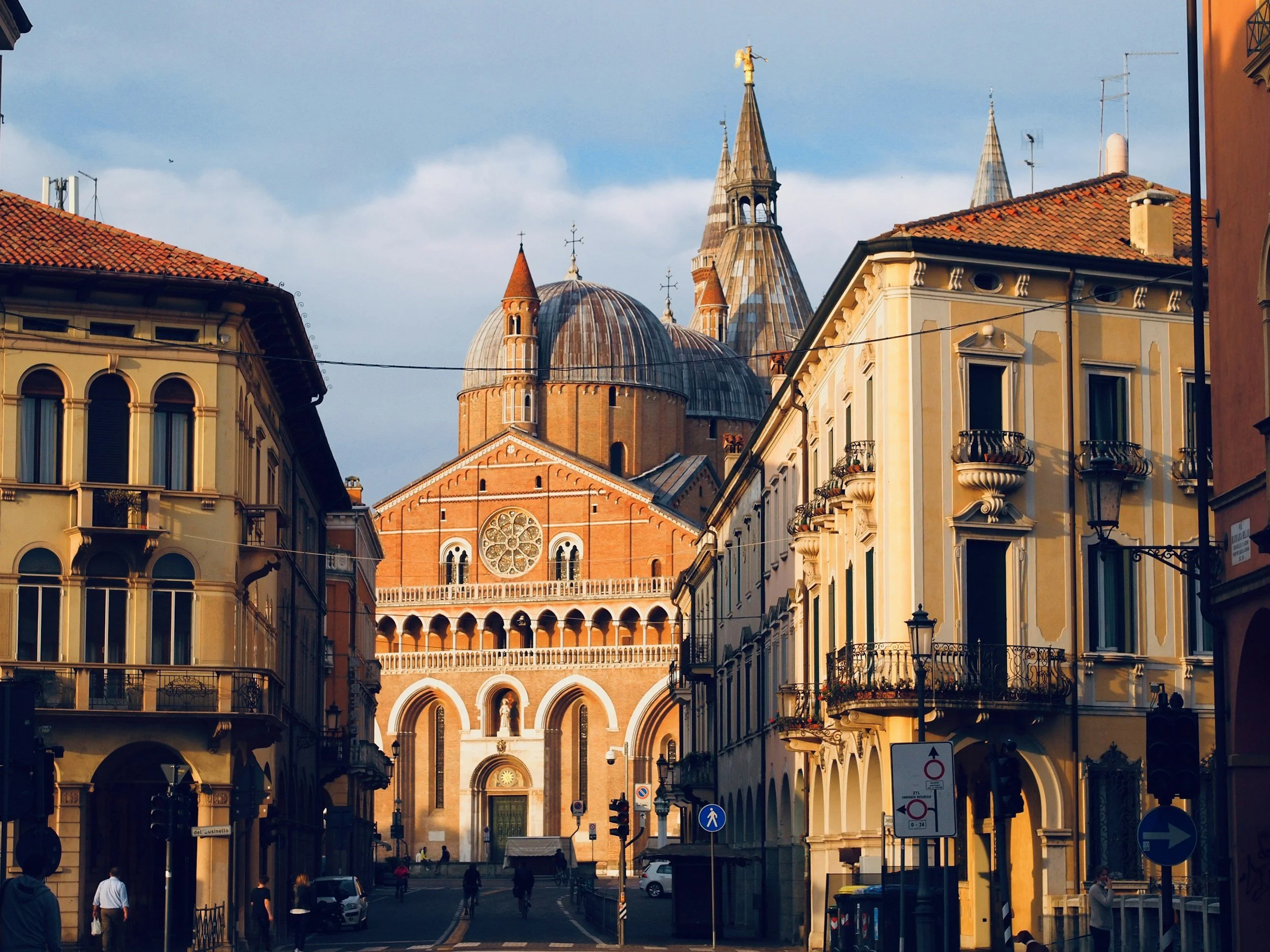
As soon as I walking into the opening part, the grumps fell off me and that familiar calm, cooling of the heart and eyes at being in the presence of a million plants, all dedicated and chosen to represent how Nature heals, regulated my nervous system, and opened my eyes and heart to the wonder of the botanical world.
All plants have healing capacities, even just by observing green growing things, something stirs inside me and I settle in to the ‘at home feeling’.
It is laid out in a kind of walk-way – little fountains cooling the air, delighting the senses, and walking around the ‘world’ brings me right round to the long walkway, where Goethe’s palm, encased in a protective shield, has been thriving since 1585. Overall the garden is quite small, the only place I wasn’t sure about were the glass houses – that gave off a feeling of maybe I wasn’t meant to be in them, or perhaps they were rearranging the displays.
The central circle is magic, little walkways take you through different gardens, and as you walk ‘around the world’ there are little places to sit and just be, in this place that has been here for 500 years. ish.
In an old image where you can see a young magnolia tree, already in place for decades, is now giving shade with age old magnificence.
Goethe’s palm which enthralled him all those years ago is now bursting out of it’s cage. Water flows gently and refreshingly, and walkways are framed for the long view.
A perfect balance of tiny cute winding paths, and the grandeur and expanse of letting the eye wander and settle onto a scene in the distance, I completely adore it, and if I can bear the intensity of Padua again (mind set meditation definitely needed at least 50 miles out) I would love to visit, and maybe spend a little time longer afterwards somewhere pretty with a view.
Three Key Dates:
1545 – garden first created
1585 – Goethe’s palm planted
1750 – male ginko planted
Important plants:
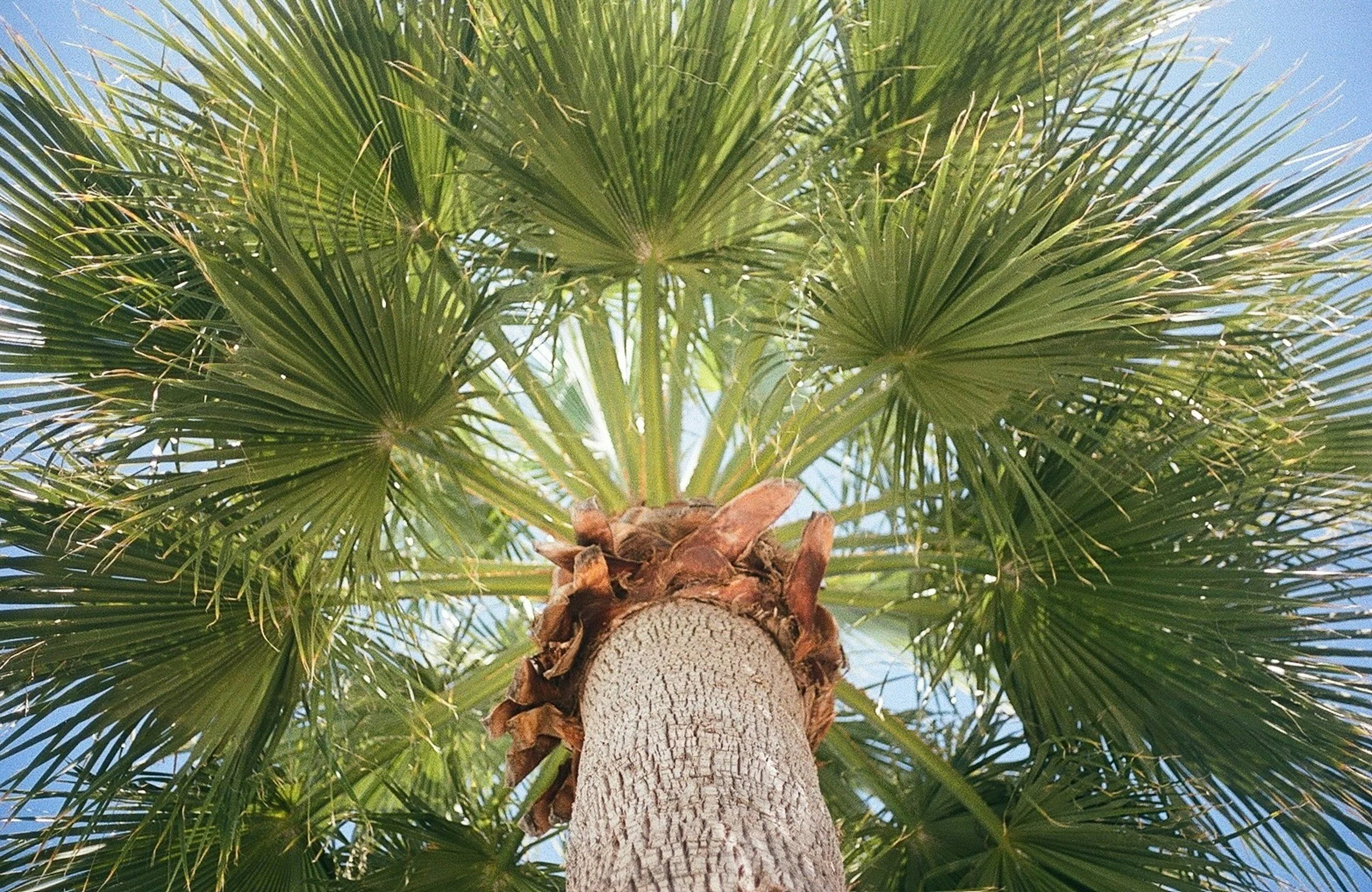
Goethe’s Palm – Planted in 1585 it is currently the oldest plant present in the botanical garden Patavian, universally known as “Palma di Goethe” since the German poet after admiring it in 1786, formulated his evolutionary intuition in the “Essay on the metamorphosis of plants” published in 1790.
Acacia or robinia – The specimen of the botanical garden of Padua is the first acacia (or robinia) introduced in Italy; it dates back to 1662, or just sixty years after its introduction into Europe by the gardener of the king of France, Henry IV, Jean Robin, whose surname Carl Linnaeus formed the name of the genus Robinia.
Oriental Platanus – Planted in 1680 in the Arboretum, near the entrance: it is one of the most ancient plants in the garden.
Magnolia – Indicated as an evergreen magnolia, the most ancient specimen present in the Garden dates back to 1786 and is considered one of the first introduced in Italy, if not the first ever.
Himalayan Cedar – Located between the Montagnola and the Fountain of the Four Seasons, it was planted in 1828, it was the first example of this species translated in Italy.
Ginkgo – According to tradition, the majestic ginkgo located inside the North Gate was imported into Padua in 1750. It is a male specimen on which, in the mid-nineteenth century, a female branch was implanted for educational purposes. Its characteristic cone shape was lost due to lightning.
Key People:
Francesco Bonafede (professor of literature at The University of Padova) requested a medicinal vegetable garden, to facilitate the learning and recognition of authentic medicinal plants compared to the sophistication. In 1545 a decree of the Senate of the Republic of Venice approved the constitution and the works began immediately.
The architect was Daniele Barbaro, a Venetian nobleman who was a man of vast learning and translator of Vitruvius’ De Architectura. He followed the example of the medieval Horti Conclusi, (enclosed gardens), marking the architecture by a perfect pattern of a square within a circle, divided into four parts by two paths oriented according to the cardinal points.