Bristol Fungarium
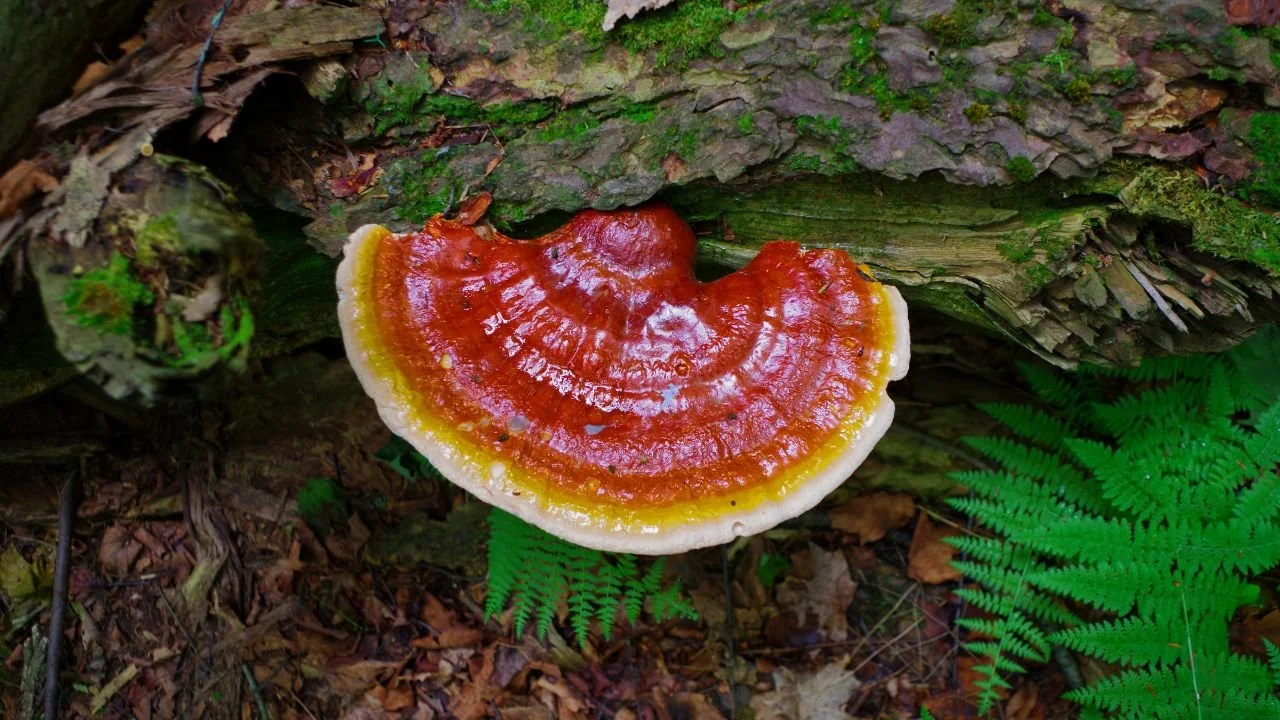
Bristol Fungarium has been cultivating something remarkable: the UK’s first certified organic medicinal mushroom range. From lion’s mane and reishi to maitake, cordyceps, and beyond, they handle every stage in-house, from spores and sterile lab work through to fruiting blocks and finished tinctures.
Their care extends even further, with a living library of over a hundred native strains and ongoing research into the possibilities these fungi hold.
What first caught me was their aesthetic, the way their design and branding seemed to mirror the elegance of the mycelial world itself.
And then, when I began working with their tinctures in clinic, the results deepened my respect even further. Both in my own experience and with clients, the impact has been striking.
I was lucky enough to sit down with founder Tom Baxter to hear more about the world of mycelium and how it all began.
Malika: When did it all start with mushrooms for you?
Tom: I grew up on the edge of Longleat Forest, so as a kid I spent a lot of time in the woods. I’ve always been curious about what goes on there. I don’t remember exactly when I started foraging, but it was a long time ago.
Later, around 2010, we moved with my four kids to the foothills of the Pyrenees in southern France. I spent hours hunting mushrooms and learning from locals who really knew what they were doing. Most of the time I came back empty-handed. My kids teased me for it. Conditions would be perfect, we’d rush out, and still find nothing.
France was far less fungi-phobic than England. You could take your finds into a chemist, who’d usually tell you just how ignorant you were as an Englishman. More than once, I was lucky not to have eaten something dangerous.
Eventually I set up an organic veg farm. To make money in the winter months, when nothing else would grow, I started cultivating mushrooms. I hired Henry, who was much more skilled in lab work, and he began cloning wild specimens.
One day we found a lion’s mane growing nearby, but the tree was cut down. I tracked down the landowner, had a go at him, and then asked if he had any land for sale. He said nobody makes money off land, but it turned out his family owned thousands of acres around Bristol. Ironically, the reason we’re here now is because of that lion’s mane. We ended up moving just one field away from where we first found it.
It’s extraordinary really. We now release billions of spores from that lion’s mane, because it’s the one we grow. When we tested it, it had around 20% higher polysaccharide levels than five other commercial strains.
I think it’s to do with place. Fungi, like plants, have environments they thrive in. Growing something endemic to here, that’s been part of this land for millennia, seems to give it more compounds. We see the same with reishi we grow just a couple of miles away. Most of what we cultivate comes from Somerset, within a few miles of here, and they always test richer than non-local strains. Why that is, I don’t know. But it’s true.
We began by selling to restaurants. There’s even a fruiting chamber we built at The Ledbury in London, a three-Michelin-star place, where diners can see the mushrooms growing. So really, it came down to providing for those around me.
Malika: Something I’ve always found interesting is dosage. At college, every teacher had a different take. Some went in really big, others were much softer. How do you see dosage when it comes to mushroom tinctures?
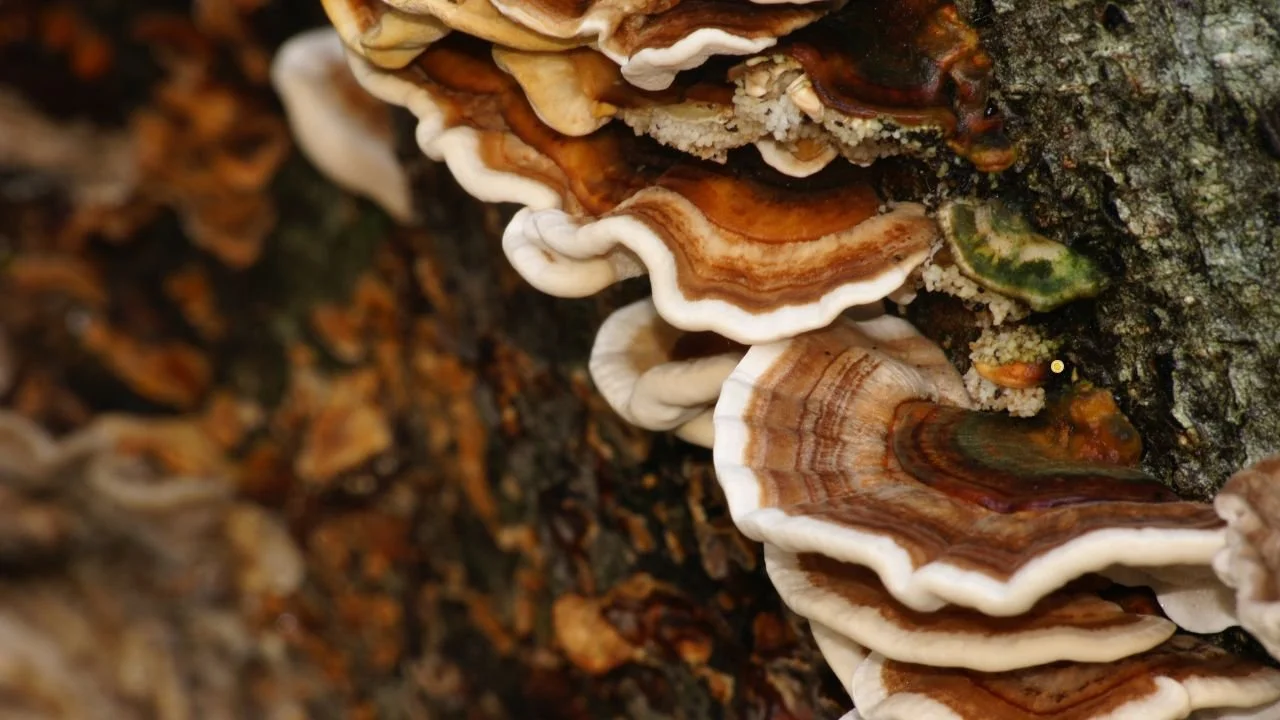
Tom: Dosage has probably been my biggest area of focus. First, there’s the practical question: what’s the maximum dose of these mushrooms we can give? From a business perspective, how much can we put into products without going bust? And then clinically, looking at trials (especially those done alongside chemo and radiotherapy), there does seem to be a direct correlation between dose and outcome. In cancer trials, it often comes down to survival rates at one, three and five years, and higher doses seem to improve those outcomes.
What’s exciting for us is having Priam on board, with thirty years’ experience in analytical chemistry at Pfizer and Glaxo. With him, we can buy standards for specific compounds, calculate their molecular weight, and actually quantify what’s in our tinctures. That gives us a clearer idea of dose compared to pharmaceutical models.
Take reishi: there are over 200 compounds in the mushroom. We’re counting maybe ten. That means we don’t know the full picture, no one does, but we can measure what we can. For example, in just 1ml of our reishi tincture, the ganoderic acid content alone is considered a low pharmaceutical dose. When you add in the other compounds, the combined weight definitely reaches pharmaceutical levels.
The challenge is comparing our products with studies, many of which come from Asia. They often just say “5g” or “8g” of Ganoderma lucidum, without clarifying whether that’s whole mushroom, extract, or what ratio. Eating eight grams of dried mushroom won’t yield much, because your stomach can’t break down all those compounds. But if it’s a 50:1 extract, that’s a lot of mushroom.
We’ve also tested reishi products from China. Martin Powell even introduced us to the head of the largest organic extraction company there. Some of the products we tested had almost nothing in them. So even though they used more raw mushroom, the base material was so poor that their extracts contained less than ours. That makes comparisons really tricky.

Another factor: in Asia, reishi is often sold as spore oil or cracked spores, which are very high in triterpenes. Our tinctures show higher ganoderic acid levels than many competitors, but lower total terpene counts overall, which is odd, since ganoderic acids are themselves triterpenes. The more you look into it, the more complicated it becomes.
Still, if I were in your shoes, I’d lean towards higher doses. The studies I’ve read consistently suggest outcomes are dose-dependent, particularly when mushrooms are used alongside cancer treatments. The problem is knowing exactly what patients in those trials were actually consuming.
There’s also a caution: strong products, taken consistently for years, can sometimes stress the liver. There are rare cases of liver issues linked to long-term, high-dose reishi or maitake use.
Overall, though, especially for acute conditions, front-loading with a higher dose makes sense. For long-term, supportive use, a lighter approach might be more appropriate. But yes, your teacher who advocated higher doses? From what I’ve seen, the science supports that view.
And here’s another factor: even with the best process, you’ll only pull out about 20% of what’s in the mushroom. Chitin, the same stuff as crab shells, forms a triple helix that’s very hard to break down. So working out dosage is almost impossible unless you know what compounds are actually there.
That’s the problem with many commercial claims. A product might boast “X% beta-glucans”, but you can just add beta-glucans to make that number go up.
That’s why Martin Powell is now planning to use Priam, our analytical chemist, to count compounds in his products too. Over the next year, that will help people make clearer value judgments.
There’s also the question of stability. Compounds break down over time. Extract powders, with their huge surface area, oxidise quickly. Some powders are three years old by the time they’re sold, and you can lose 80% of compounds in just eighteen months.
That’s why freshness matters. Like food, fresh is better. Apothecaries once made potions on the spot. That had value. It’s the same today: fresh products hold far more compounds, which degrade as they age.
So yes, dosage is crucial. But unless you know what’s actually in the product, you’re working blind.
Malika: I’ve been trying to trace the roots of mushrooms in Western herbal medicine, but I can’t find a clear thread in folk practice. Do you know if there’s any history of their use here?
Tom: Interestingly, I’ve looked into this a bit. There’s a man who lives over the valley who’s almost finished a 900-page manuscript. He was one of the leading experts on medieval herbalism. He even designed the herbal garden at Hampton Court thirty years ago. He’s spent decades studying medieval texts, especially German ones, and knows more about that lineage than anyone else I’ve met.
From what I’ve seen, a lot of medieval herbalism in Europe comes through Germany. There are a few scattered references: some of the early Roman chronicles, Plutarch for example, mention druids taking mushrooms that supposedly made them impenetrable. That was probably liberty caps or something psychoactive.
The only clear herbal reference I’ve come across is during the plague. In one of the old London Tonics, Number One or Number Two, I forget which, around 30% of the formula is described as a bracket fungus, probably a type of Ganoderma. So that’s the only real evidence I’ve seen of indigenous fungi being used medicinally here.
Which is fascinating, because we now know how antiviral some of these mushrooms can be.
The wider perspective is about time. Until recently, we thought fungi first appeared around 1.5 billion years ago. But fossils found in South Africa suggest mycelial structures dating back 2.3 billion years. The trouble is, fungi don’t fossilise well, so the record is thin.
For their first billion years or so, it was just bacteria, viruses, and fungi on the planet. Mycelium is only one cell wall thick, so anything can pass straight into it, bacteria, viruses, other fungi. To survive, fungi had to develop defensive biochemistry, constantly producing new compounds to fend off invaders. That arms race went on for hundreds of millions of years, leaving them as these incredible biochemical factories.
And because fungi sit closer to animals than plants on the evolutionary tree, many of their compounds have molecular structures very similar to ones in our own bodies. That’s why so many of their compounds are easily recognised by human receptors.
It also makes sense that early people would have watched animals. There’s evidence of western lowland gorillas eating bracket fungi when unwell. People must have seen deer or other animals doing the same and copied them.
So I can’t believe mushrooms weren’t part of the old apothecaries here, especially given how forested Britain was 2000 years ago, or 6000, 8000 years ago. Add the psychoactive species into the mix, and it’s hard to imagine they weren’t central to ritual and healing.
The evidence is thin, though. I think the person I need to speak to before it’s too late is Anthony, the medievalist I mentioned. He’s publishing his life’s work soon, hopefully while he’s still with us. He’s probably studied more German medieval herbals than anyone else in the UK.
Malika: When I look at Druidic medicine I see they didn’t write things down. I imagine they didn’t need to, because they were learning from each other. They didn’t need to codify it, because it was internalised. Whereas now we’re focussed on everything being written down, researched, measured by outcomes and therefore think that makes us the wisest humans have ever been. But I think our ancestors had a knowing. If people could put their hand on the earth and sense their family coming from miles away, just from how the earth felt, I think they had that kind of knowing.
Tom: “Knowing” is a nice way of describing it, but it’s really a question of what we spend our time looking at. What you read will be very different from me. I love history. And there’s no doubt that if you go back two thousand years, people weren’t writing, it was all oral tradition. You still see that in certain cultures. The mythic side of things is still alive in Siberia, for example.
But when the Slavs came in, the number of tribes in Siberia was decimated, from hundreds to just six or seven today. That whole mythic, oral tradition largely disappeared. The same thing happened here, and later the printing press changed everything again. The way we acquire knowledge now is so different from how people did before.
If you look at China, they were astonishingly advanced. Around zero AD, the level of sophistication in their society, their banquets, their culture, the richness of their forests, was extraordinary. In comparison, England was worlds away. Their structures of behaviour were incredibly sophisticated compared to how simple ours were.
And that’s part of the challenge. We don’t even have the lexicon to describe the kind of knowledge people held then, or the kind of understanding that came from being rooted in place.
Those older generations in Suffolk and Norfolk still carried knowledge from a world where horses were venerated, where the evil eye mattered, where ragstone and runes were part of daily life. Even today, some carpenters in Suffolk still carve runes into the beams of new roofs. A tradition that’s been alive for 1200 years.
We’ve lost so much of that, especially in the last 80 years since the war. Languages disappearing too. With each language, whole bodies of knowledge vanish. That loss mirrors the destruction of the natural world, which in turn mirrors the decline in human health. But because we see ourselves as separate from nature, we don’t connect the dots.
So yes, there was knowledge there, deeply rooted. The challenge is that our ancient woodland has been decimated. There is a positive side: woodland cover has grown from about 6% in 1905 to 10% or more today. But the mushrooms we’re most interested in are heart rot fungi, and they need ancient trees, hundreds of years old. That’s the kind of ecology our ancestors lived in, and it’s rare today.
The New Forest gives some sense of what it might have been like.
And this late summer, I’m excited to explore different forests across England, seeing what’s available now, and creating a tincture that captures as many of these beneficial mushrooms as possible. That’s surely what people would have done. Experiment, try, remember.
It’s also regional. Around Stoke, for example, there’s an abundance of Phellinus, or horseshoe fungus, which is highly valued in Chinese medicine. So this year we’ll head up there to forage.
It’ll be like a little tour of England’s ancient forests, seeing what nature’s pantry still holds.
Malika: What kind of real-world results have you seen?
Tom: Just this weekend we had quite an interesting case where a man had treatment for prostate issues. He’d been living with hot flushes for three years. He’s on immunosuppressant and testosterone-suppressant medication, along with a few other things. The day after starting the tinctures, he came back and said, “I don’t know if this is the tinctures, but for the first time in three years, I haven’t had a single hot flush.”
From our perspective, with reishi in particular, if you look at it through a Western lens, at compounds and their functions in the body, it seems to be the organic acids that matter.
Malika: Have you had any feedback from people using mushrooms alongside bodywork or breathwork?
Tom: Yeah, definitely. We’ve done a few sessions ourselves over the years: reishi tea ceremonies, sometimes combined with breathwork or bodywork. Two mushrooms stand out in that context. Reishi is one. It dilates the capillaries, helps the body hold more oxygen, and slows the heart rate. That makes it especially relevant when you’re trying to deepen presence. The other is cordyceps, because of its ability to increase cellular oxygen use through ATP. Those two in particular. But reishi is the real go-to. It always has been.
There’s a reason it was restricted to the emperor and his family for 300 years. So yes, reishi is my first choice. We’ve run plenty of sessions where people drink reishi with cacao.
Thank you Tom! The world of fungi reminds us that health is never a straight line but a web, alive with quiet connections. Bristol Fungarium tends that web with patience and precision, bringing the resilience of ancient forests into bottles on our shelves. Their work carries a sense of continuity — from woodland to lab, from spore to tincture, from soil to sip.
If you feel called to meet these mushrooms in your own life, you can find their living library of tinctures and research at:
www.bristolfungarium.com
@bristolfungarium