Le Jardin Secret
Nestled within the labyrinthine alleyways of the historic Medina of Marrakesh lies an oasis of serenity and splendor: the Secret Garden. With its rich history, illustrious residents, and lush botanical treasures, this hidden gem offers a glimpse into the soul of Marrakesh and its enduring connection with nature.
The roots of Le Jardin Secret extend back to the latter part of the sixteenth century when Sultan Moulay ‘Abd-Allah initiated the urbanisation of what we now know as the Mouassine district in Marrakesh.
However, like many significant structures in Marrakesh, the palace situated within the grounds of Le Jardin Secret fell into ruin towards the end of the seventeenth century, following the decline of the Saadian dynasty.
In the mid-nineteenth century, Kaid al-Hajj Abd-Allah U-Bihi acquired the land and, respecting the layout of the original Saadian-era complex, constructed a new palace. This period marked substantial development in Marrakesh, leading to the creation of gardens and opulent mansions. However, suspicions arose regarding Kaid U-Bihi's intentions, and he met his demise through poisoned tea, casting a shadow over the property's ownership.
The estate then passed to Qadi Moulay Mustapha, a distinguished judge with close ties to the ruling family. In 1912, he exchanged the palace for a manor in Fez owned by al-Hajj Muhammad Loukrissi, former head of the watchmakers’ guild in Marrakesh and chamberlain to Sultan Moulay ‘Abd-al-Hafiz.
Following the Sultan's exile in 1912, al-Hajj Muhammad Loukrissi made the palace his home until his passing in 1934. Sadly, the property fell into disrepair as maintenance dwindled. The notion of restoring the building complex and opening it to the public emerged in 2008, culminating in the creation of Le Jardin Secret eight years later.
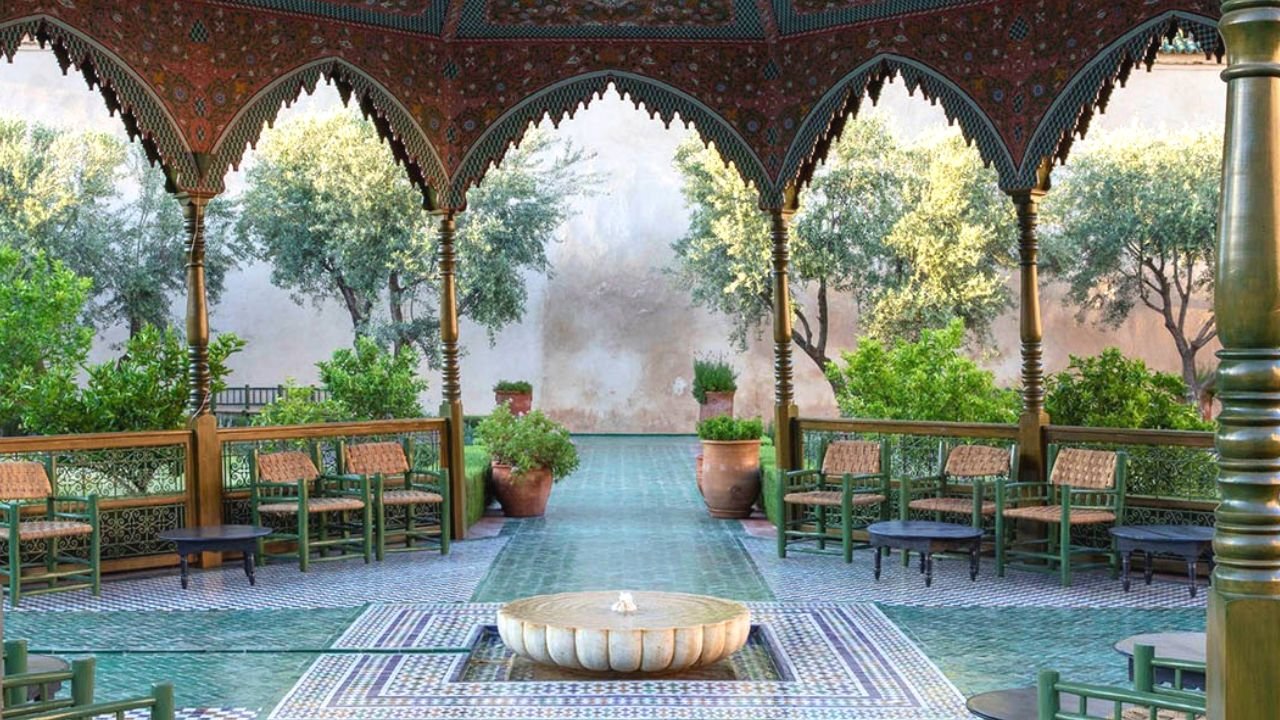
Le Jardin Secret comprises two distinct architectural complexes, each designed as a self-contained riad. Encircled by high walls devoid of windows, the riads feature a rectangular layout centered around expansive gardens. At the heart of these gardens lies a marble basin, dividing the space into four flowerbeds intersected by raised walkways.
Welcoming visitors are pointed arches and wooden lintel porticoes leading to the pavilions of Le Jardin Secret. Characterised by exposed beams, double doors, and windows slightly elevated from the ground, these pavilions exude an air of grandeur and elegance.
The significance of the building is underscored by its sheer size and the inclusion of amenities such as a private hammam, a qubba, and a towering tower. These architectural elements served as symbols of wealth and power, towering above the bustling medina below.
Aesthetically, Le Jardin Secret is distinguished by the extensive use of tadelakt, adorning brick and rammed earth walls. Intricate zellij and bejmat tiles from Fez, inlaid cedar wood, meticulously hand-carved stuccos, and geometric motifs crafted by master artisans showcase the exceptional craftsmanship of local craftsmen.
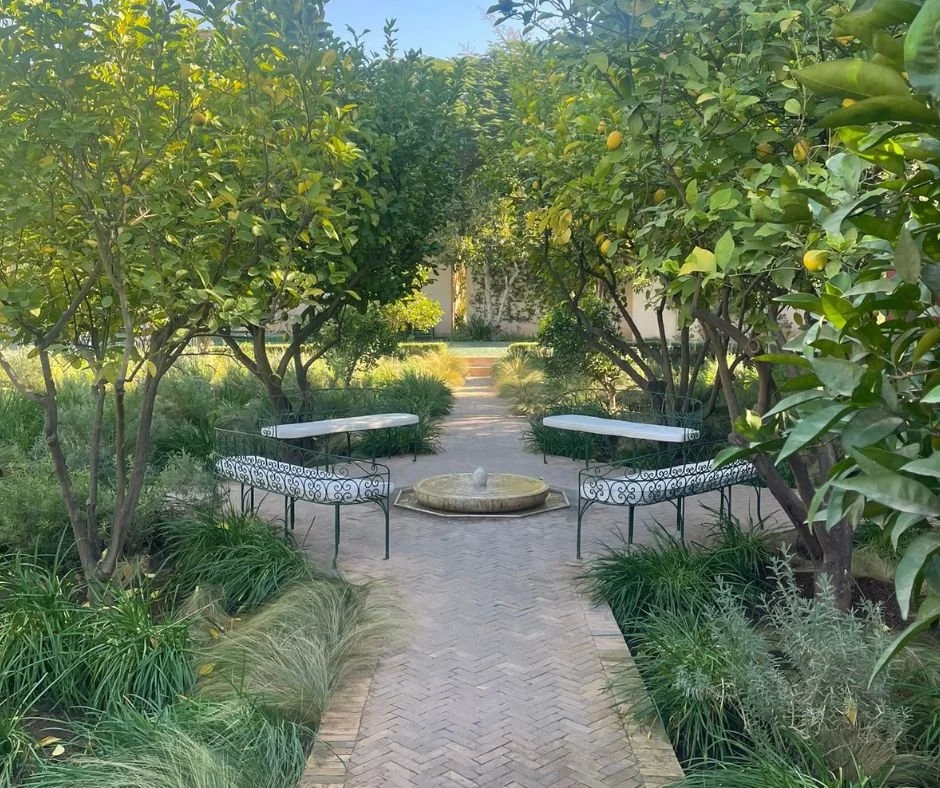
Presently, Le Jardin Secret features two distinct green areas: an exotic garden and an Islamic garden. The exotic garden boasts a diverse array of plants sourced from around the globe, reminiscent of Marrakesh's historic tradition of experimental gardens.
Throughout history, Marrakesh has epitomized the concept of a garden city, earning monikers such as "a rose among palm trees," "an oasis in the desert," and "Al-Bahja," the city of peace and open air. This legacy is evident in iconic gardens like Agdal and Menara.
The Islamic garden at Le Jardin Secret has been meticulously restored to reflect its likely nineteenth-century layout. Integrated with the riad structures, this garden served as a tranquil oasis, inviting visitors to indulge in contemplation and relaxation amidst the shade of trees and the intimate confines of the enclosed space.
The four-part layout of the Islamic garden, dating back to ancient Persian gardens and prevalent in Morocco since the twelfth century, was designed to facilitate efficient irrigation and holds symbolic significance. It echoes descriptions of heaven in the Quran, portraying the garden as a sacred space where Muslim order triumphs over the chaos of nature, adhering to strict geometrical principles.
At the core of Le Jardin Secret, mirroring the tradition of Islamic gardens, lies a spring. This water source not only creates captivating light patterns and fosters an intimate atmosphere but also serves as a reflective surface, inviting contemplation and spiritual purification. Water holds profound significance in Islamic culture, symbolizing life and the omnipotence of God, while the Quran depicts heaven as a place adorned with flowing streams.
In the latter half of the Eleventh Century, the Almoravids harnessed a millennial hydraulic tradition and the proximity of the Atlas Mountains to construct Marrakesh's first khettara. This ground drainage tunnel intercepted groundwater aquifers, distributing water to mosques, hammams, fountains, and select residences like Le Jardin Secret. This provision of water was a rare privilege and symbol of affluence.
Today, vestiges of the riad's original water system are still visible, comprising interconnected pipes, reservoirs, and canals. This intricate network stands as a testament to the foresight and ingenuity of the past, ensuring the garden's vitality and serving as a reminder of its storied history.
Why was I there?
Post retreat – we had just finished the glorious retreat in the Ourika Valley, and I wanted to spend an extra couple of days in Marrakesh to explore, this garden provided a complete sanctuary to sit and embody the healing from the previous days.
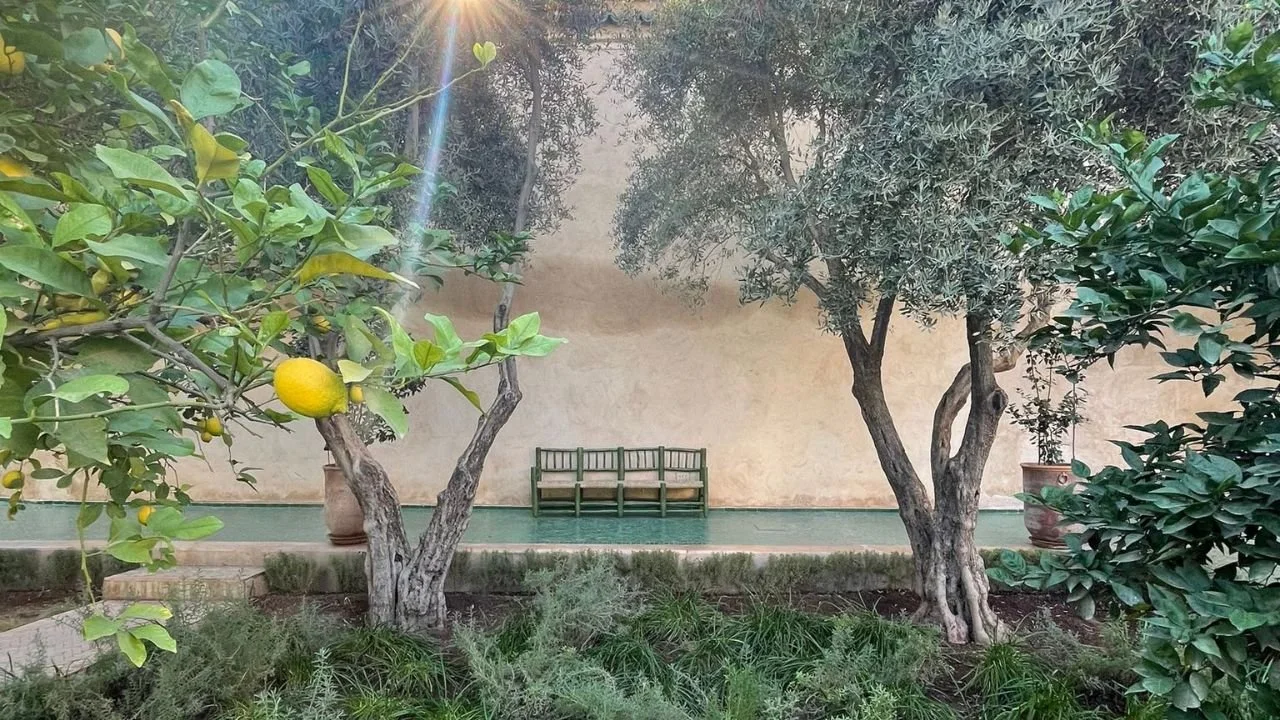
Reflection – Gardens are my happy place, and this was the first time that I had some space to sit with my heart, newly saddened by a range of life and lost loves events. The Olive trees, lemon and lavender created a gentle scent in the Winter sun, which danced along with the flow of the water, and created a complete oasis to sit with what the moment called for.
Instead of the Majorelle – Which is the garden that I had been heading for, however my feet took me here instead, and that one will have to wait until my next Marrakesh visit. I have wanted to visit those yellows and blues but today I think I just needed the green.